

One chart across a CCBHC’s crisis, outpatient and recovery services
A CCBHC serves anyone who asks for care. Encore OS keeps the crisis response, outpatient and medication services, the sliding fee discount and SAMHSA grant reporting for each person on one record.
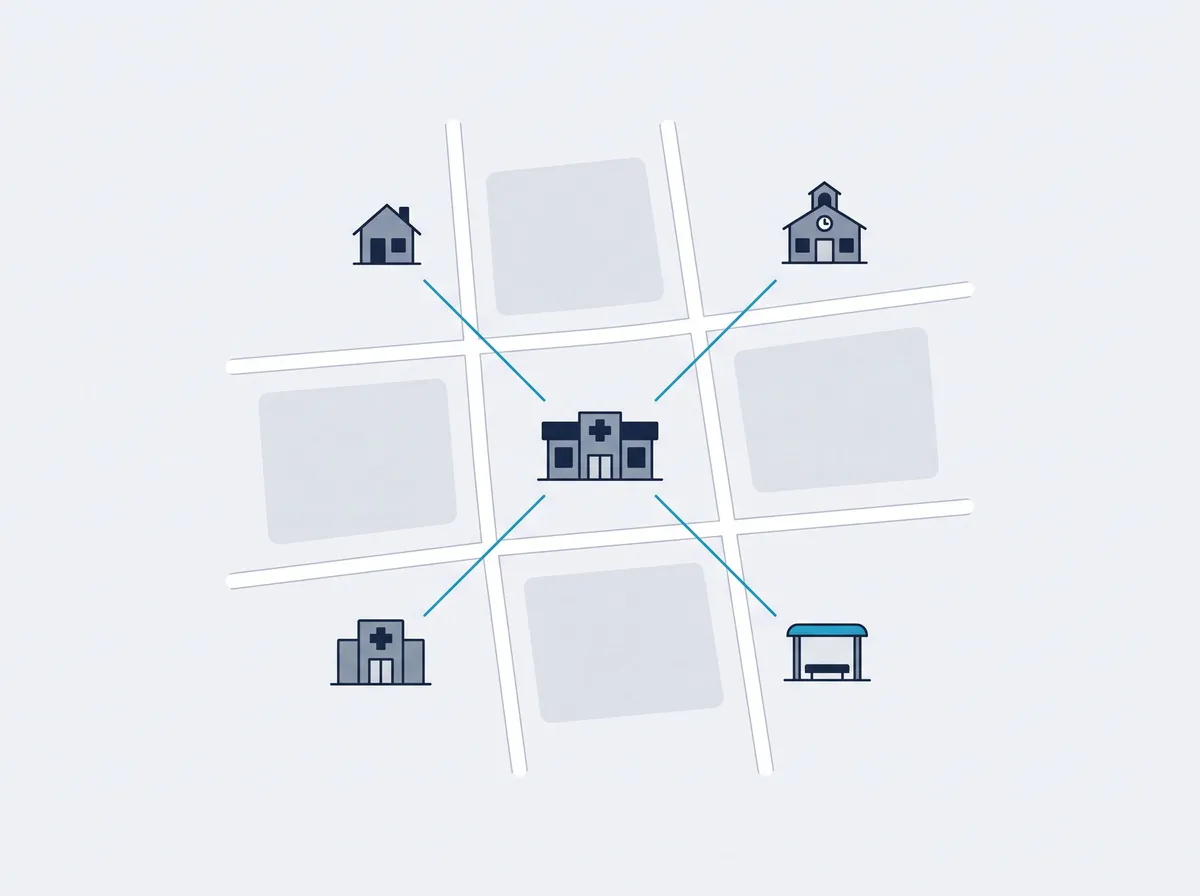
Asked every week in a CCBHC
Which crisis calls came in overnight, and who responded?
Crisis alerts from intake screening are triaged in a tiered queue, and mobile crisis visits are recorded with every participant.
What does this patient owe on the sliding fee scale?
Sliding fee discounts come from an income assessment and apply as each charge is created.
Which patients have open care gaps?
Care-gap worklists, patient cohorts and quality measure results sit on population health dashboards.
Is this person’s dosing on the same chart as their therapy?
Medication for opioid use disorder dosing sits on the same chart as assessments, treatment plans and progress notes.
What running a CCBHC across separate systems looks like
- The crisis team, the outpatient clinic and the medication program each keep their own chart for the same person.
- Sliding fee discounts are worked out by hand, apart from the charge they belong to.
- Each program writes up level-of-care decisions in its own format.
What you run on Encore OS
- Crisis alerts raised from intake screening answers and triaged in a tiered queue
- Encounters with several participants, such as family sessions, mobile crisis visits and care team meetings
- ASAM level-of-care assessments with a level-of-care history on each chart
- Medication for opioid use disorder enrollments, dosing events and controlled substance inventory
- Sliding fee discounts from an income assessment, applied as each charge is created
On the roadmap
- Calculated results for every CCBHC clinic-collected quality measure
- SAMHSA grant outcome measure rollups with small-count suppression
- Prospective payment system billing at FQHC and CCBHC encounter rates
Where this clinic model sits in the continuum
The marked levels are the ones this model runs on Encore OS. Each person keeps one chart across them, and into any other level they need.
Travels with the person: Level-of-care historyPart 2 consentSafety plan
This model
Crisis services
Inpatient units
Residential treatment
This model
Outpatient, IOP and PHP
This model
Opioid treatment
Recovery housing
Before you choose
Can our crisis team and our outpatient clinic work from the same record?
Yes. Crisis alerts raised at intake, mobile crisis visits and outpatient group sessions all land on the person’s one chart, so the clinic that follows up sees what the crisis team learned.
Can Encore OS bill at our CCBHC payment rate?
On the roadmap: prospective payment system billing at FQHC and CCBHC encounter rates. Today, claims are checked against payer edit rules before submission, and billing rules and filing deadlines follow Arizona (AHCCCS) rules by default. On the roadmap: rules for more states.
How does 42 CFR Part 2 consent work across our services?
Consent is captured on the person’s record, and redisclosure is tracked when protected information is shared, whichever service shares it.
More detail: Every level of care · Security and compliance
Walk through a CCBHC day
We will follow one person from a crisis alert to outpatient care and a discounted charge on sample data.

Oliver Nielsen
Chief executive officer

Jeremy Bloom
Co-founder
Brittany Pierce
Co-founder and clinical advisor
Encore OS’s co-founders came to software from running behavioral health programs.